



How a Used Explorer Stacks Up Against Its Segment Rivals
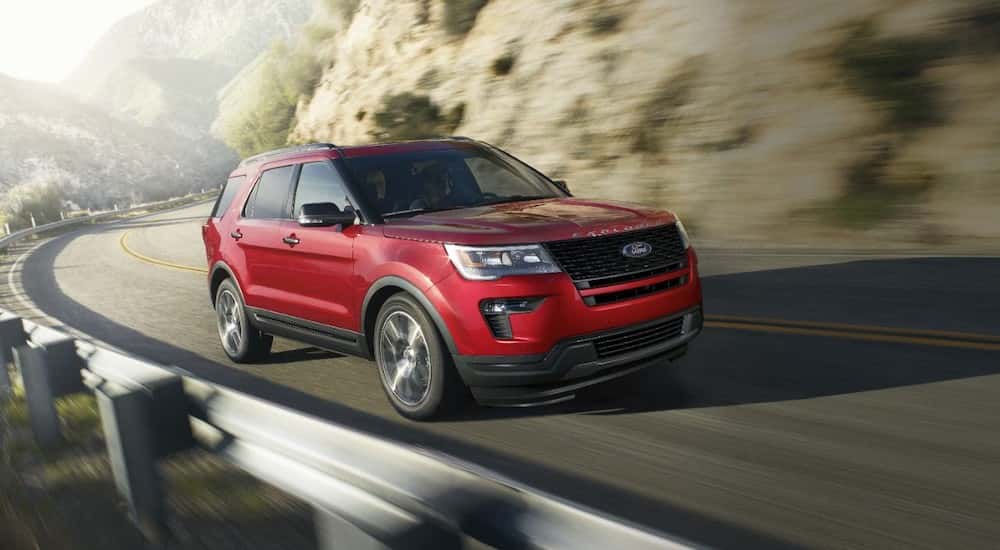
A three-row SUV is a big vehicle with a powerful engine under the hood, which means that even a relatively affordable model can be expensive if you’re shopping for something new. Turning to a used model is a smart choice that gets you more bang for your buck. But to ensure you drive with confidence, you want to make sure you get a well-constructed model that you can rely on for the long haul.
When you see a Ford Explorer for sale, you might instantly appreciate its style, comfort, and power, but it’s only natural to wonder whether there are better options from other automakers. So today, let’s see how the Explorer stacks up compared to some of its fiercest competitors in the three-row midsize SUV segment: the Chevy Traverse, Hyundai Palisade, Kia Telluride, Honda Pilot, Nissan Pathfinder, Toyota Highlander, Mazda CX-9, and GMC Acadia.
Comparing used models can be tricky, since features often change from year to year. To keep things simple, we’ll mainly look at the 2020 model year; this was the first year of the Explorer’s sixth generation, which is still the current generation as of the 2025 model year. While there have been some updates in the years since, the basics remain the same, and the features we cover here should be pretty relevant for a lot of models you might find on a used lot today.
Interior Space
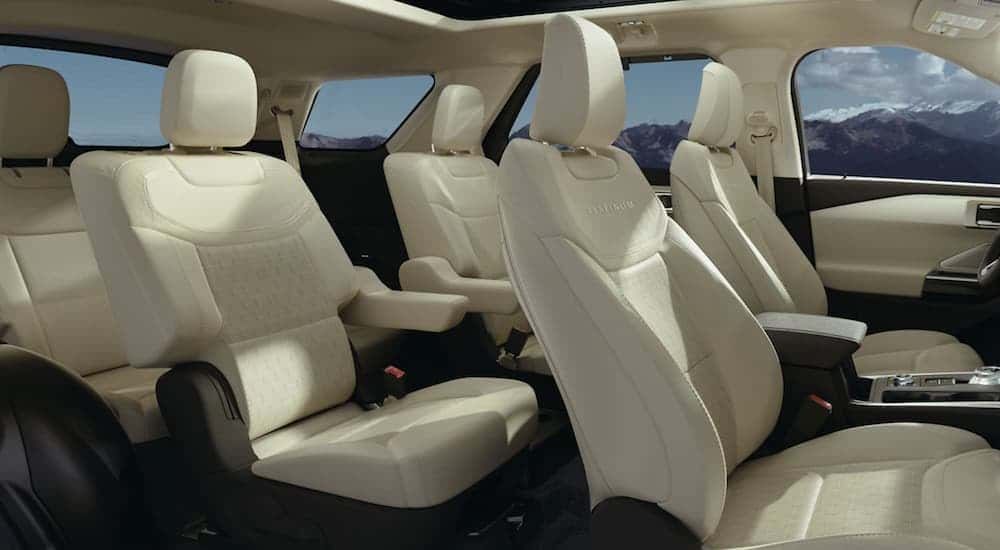
When you’re in the market for a three-row SUV, space is likely essential in your mind. You may not need the bulk of a full-size model, but you need enough space for numerous passengers to stretch out, get comfortable, and bring plenty of cargo along for the ride. So, where does the Explorer stand when it comes to spaciousness?
While the Ford Explorer doesn’t have the most cavernous interior of all of the SUVs we’re looking at, it’s very much near the top of the pack. Only the Chevy Traverse and Kia Telluride offer more cargo volume behind the third row of seats, and only the Traverse offers more cargo space with the second and third rows of seats folded down. As for third-row legroom, once again the Explorer is second only to the Chevy, and only by a little over an inch. By contrast, the worst offenders for cramped third-row space (the Toyota Highlander and Mazda CX-9) have multiple inches scraped away compared to the Explorer.
While the winner for cabin space may be a Chevy, that space comes at a cost. The 2020 Traverse has an exterior that’s nearly six inches longer than that of the 2020 Explorer, making it harder to park and maneuver in tight spaces. You might expect the Explorer to be similarly longer than the other models, but you’d be wrong. In fact, despite offering a more cramped third row and less overall cargo volume, the Mazda CX-9 is slightly longer than the Explorer, and the Nissan Pathfinder is only 0.3 inches shorter. The Explorer’s design makes good use of its space, offering a perfect balance between exterior size and interior comfort.
Powertrain
Moving a large and heavy three-row SUV while still offering quick acceleration and solid driving dynamics is no easy feat; you need a strong engine under the hood in order to do it. Hopefully, you can also do it without draining fuel too quickly. On top of that, many drivers also want a reasonable towing capacity for moving, camping, and more. Balancing all of these factors is tricky, which is why the Explorer offers a range of capable powertrains.
When it comes to maximum towing capacity, only the Nissan Pathfinder can beat the Explorer. Most models top out at 5,000 lbs with the proper engine, with the GMC Acadia and Mazda CX-9 lagging behind the pack, maxing out at just 4,000 lbs and 3,500 lbs, respectively. The Explorer can tow up to 5,000 lbs with its efficient hybrid powertrain, while the Toyota Highlander Hybrid tows only 3,500 lbs. Find a Platinum trim with the turbocharged V6 under the hood, and you can unlock the 2020 Explorer’s maximum towing capacity of 5,600 lbs.
When it comes to raw horsepower, getting the Explorer’s turbocharged V6 in the ST trim yields you far and away the best figure, at a stunning 400 hp. This option is perfect for drivers looking for an athletic SUV that can deliver a thrilling ride. Looking only at the most basic engines in each model’s lineup, the Explorer still ranks quite high: Its turbo I-4 can outpower plenty of V6 engines with its 300 hp, beat only by the Chevrolet Traverse, which only has an extra 10 hp for the sake of moving its bulkier body.
Unsurprisingly, the Traverse moves from the top of the pack to the bottom when looking at fuel economy, offering only up to 21 MPG combined on models with front-wheel drive. In this regard, the Explorer ties for first when looking at base powertrains; like the Mazda CX-9 and Toyota Highlander, it delivers 24 MPG combined with rear-wheel drive and 23 MPG combined with all-wheel drive. Its hybrid option boosts that to 28 MPG combined with rear-wheel drive, beat only by the Highlander Hybrid, which delivers a stunning 36 MPG combined with front-wheel drive, but at the expense of both interior space and towing capability.
Overall, the 2020 Ford Explorer manages to thread a tricky needle in delivering a great balance of power, capability, and efficiency. Depending on which factor you prioritize most, you can look for the powertrain that best suits your needs when browsing used models.
Safety Tech
Staying safe on the road is a priority for just about every driver, and since safety features improve over time, it’s especially important to consider them when buying a used vehicle. You want to make sure that the model you’re getting not only has driver assistance features to help you avoid danger, but also a crashworthy design that will keep you and your passengers safe if you ever do get in an accident.
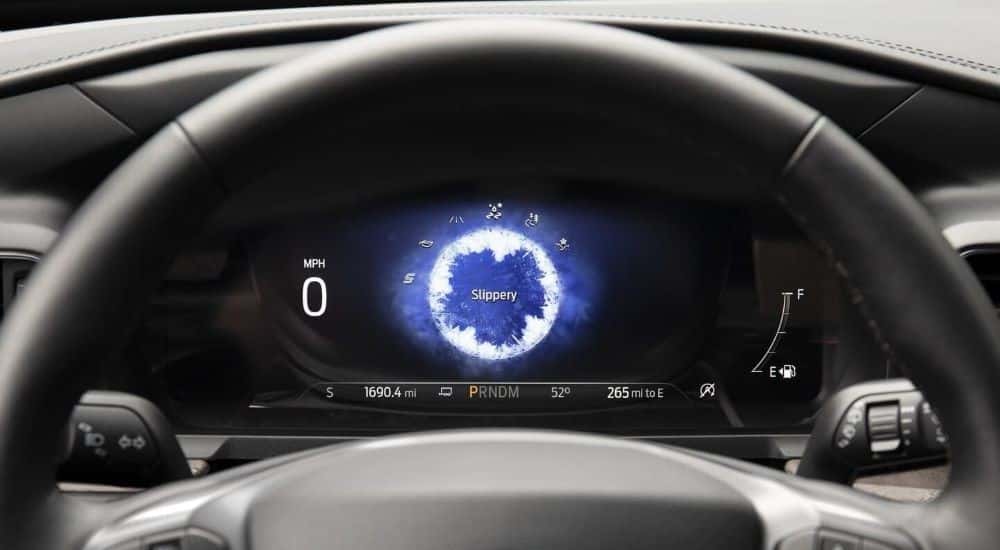
The 2020 Ford Explorer has you covered on both counts. This model comes standard across all trims with features like forward-collision warning with pedestrian detection, automatic emergency braking, lane-keep assist, blind-spot monitoring, and rear cross-traffic alert. Some of the other models we’re looking at have similar lineups of standard safety tech, but it’s not a given. For the 2020 model year, just about all driver assistance features are merely “available” on the Chevy Traverse and GMC Acadia, whereas the Nissan Pathfinder has some of these features but not standard blind-spot monitoring.
When it comes to overall safety, the Insurance Institute for Highway Safety (IIHS) is a great resource; this nonprofit is dedicated to researching and evaluating the safety of vehicles to prevent deaths and injuries on the road. In IIHS testing, the 2020 Ford Explorer got high marks across the board, earning it the designation of Top Safety Pick+, the organization’s highest honor. The only other model in this class that was able to match this was the 2020 Mazda CX-9. The Hyundai Palisade, Kia Telluride, Honda Pilot, Nissan Pathfinder, and Toyota Highlander were all awarded the less prestigious Top Safety Pick for 2020, while the Chevy Traverse and GMC Acadia got no award at all.
Well-Rounded & Well-Built, the Ford Explorer Holds Up
Shopping for a used model can be tricky since tastes can change over the years. Luckily, the 2020 Ford Explorer passes the test of time, with qualities that still win over modern drivers today. Any Explorer made in this generation is sure to be a reliable and versatile SUV that stands out in a crowded field. Whether your top concern is safety, power, or space, the Explorer has your back.









0 comment(s) so far on How a Used Explorer Stacks Up Against Its Segment Rivals